Now
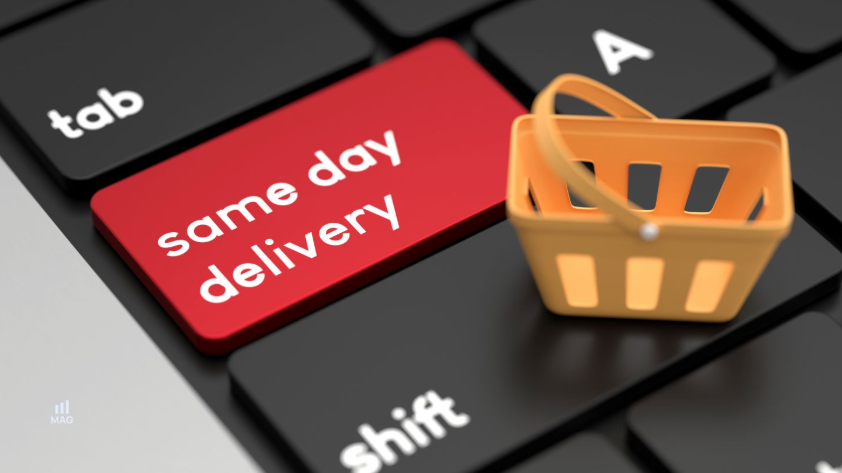
Same Day Delivery with one key stroke!
I am old enough to remember when large retailers like Sears, JC Pennys, Service Merchandise, and others had huge catalogs with all of their products. They would send these huge catalogs to consumers and we looked forward to receiving them. There was no internet, hence no online advertising. I used to love seeing the catalogs featuring toys that came in the Fall. Back then, you could either use your landline phone to call and place a catalog order if you did not want to go in the store or if the local store did not have your desired item. You could order everything from a lawn mower to lingerie, and it would be delivered to your home or to the local store in 4 to 6 weeks! I do not think that method of ordering goods would work today. Why not?
Because the ability to order something online and receive it the same day has fundamentally reshaped modern culture. What was once considered a luxury or even unimaginable has now become an expectation. This shift, driven by advances in technology, logistics, and consumer demand, has influenced not only how we shop, but also how we think, behave, and interact with the world around us. Just recently, I was packing some gift boxes to send to Chit Chat with Chip subscribers, and I ran out of the clear bags I used. I had to stop packing. I got on my mobile phone, ordered the gift bags I needed, and they were at my door in under 3 hours. I could then finish my wrapping project.
At a basic level, we as humans are wired to seek rewards. When we want something and receive it quickly, our brain releases dopamine, reinforcing the behavior that led to the reward. Same-day delivery shortens the gap between desire and fulfillment to just a few hours, which intensifies this feedback loop. The faster the reward arrives, the more our brain learns to expect that speed again. Over time, this conditions us to prefer—and even depend on—immediacy. Certain companies know that as they promise if your order is over a certain amount, it qualifies for free same day shipping.
As a result, our tolerance for waiting begins to shrink. What used to feel normal—waiting several days for a package—can now feel frustrating or inconvenient. This does not just apply to shopping; it can spill into other areas of life. People may become less patient in situations that require time, such as personal goals, career advancement, or even relationships. The expectation shifts from “good things take time” to “good things should happen now.” Communication, emotional support, and even conflict resolution may start to feel like they should happen “on demand.” When a text is not returned quickly or a need is not met right away, it can feel more frustrating than it might have in a slower-paced environment. In this way, the expectation of speed can reduce patience with others.
It can also affect how we express care and thoughtfulness. On one hand, same-day delivery makes it easier to show appreciation, sending a last-minute gift, flowers, or essentials to someone in need can strengthen connections and make people feel supported. On the other hand, it can reduce the intentionality behind those gestures. When thoughtful acts require little planning or effort, they may sometimes feel less personal or meaningful, even if the intention is good.
Same-day delivery also increases impulsive behavior. Because the delay between wanting and having is so small, there is less opportunity to reflect on whether a purchase is necessary. That pause—once built into the waiting period—is essentially removed. This can lead to more spontaneous decisions, reinforcing a cycle where desire quickly turns into action without much evaluation.
There is also a subtle psychological shift in how we perceive effort and reward. Traditionally, effort and patience were part of the process of obtaining something valuable. Losing weight and getting fit by exercise and eating healthy are great examples. With same-day delivery, the effort is minimal, and the reward is immediate. While this is incredibly convenient, it can reduce our appreciation for delayed rewards and the satisfaction that comes from anticipation.
There is also a broader shift in how people value time and presence. If life becomes centered around speed and convenience, relationships may compete with that same expectation. Spending time nurturing a relationship—which requires patience, listening, and sometimes discomfort—can feel slower and less immediately rewarding compared to the quick satisfaction of other activities. This can unintentionally lead to prioritizing convenience over connection.
However, it is not entirely negative. In some cases, same-day delivery reduces stress and increases efficiency—especially when something is genuinely needed quickly. It can provide a sense of control and reliability in a fast-paced world. Same-day delivery can reduce stress in relationships by solving problems quickly—whether it is replacing a forgotten item, helping a friend in a bind, or supporting family members from a distance. It can enable people to show up for each other in practical ways that were not previously possible. The challenge is that this benefit can easily blur into expectation, and expectation into entitlement.
In the end, same-day delivery does not directly change how we care about others, but it does shape the environment in which relationships exist. By reinforcing speed, convenience, and instant results, it can subtly influence how we communicate, how patient we are, and how we express thoughtfulness. The key is being aware of those influences and making a conscious effort to preserve the depth, effort, and time that strong relationships require. As this trend continues to evolve, we will need to consider how to balance the desire for immediacy with the long-term impacts on people and relationships.
Take care of yourself and each other!
