EI
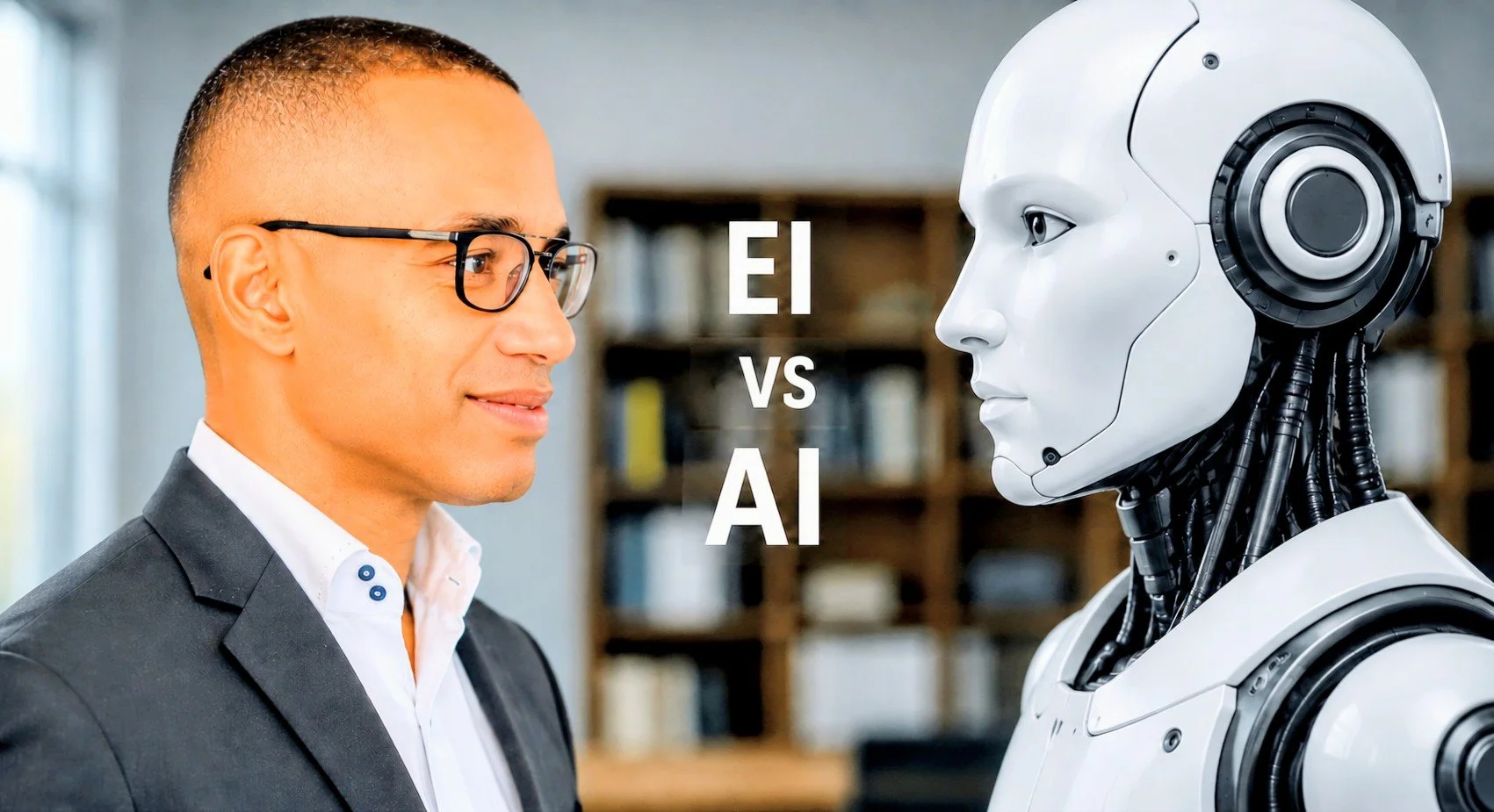
EI vs AI
AI is here. It has been here for a while. If you are like me and use virtual assistants like Apple’s Siri and Amazon’s Alexa, you have been exposed to AI. If you use productivity agents like ChatGPT, Claude, Google Gemini, and Microsoft Copilot, you too have been exposed to AI. With the expanding use of AI, should we be afraid that that AI will overtake the need for EI (Emotional Intelligence)?
The short answer is NO—but we should expect AI to change how emotional intelligence (EI) is valued. Artificial intelligence is transforming IT at a pace we have never experienced before. It can analyze millions of data points, automate routine tasks, predict outages, and even write code. Yet, despite these extraordinary capabilities, one thing remains true: technology does not lead people—leaders do.
AI is becoming remarkably good at recognizing emotional cues, generating empathetic language, and even coaching people through difficult conversations. It can identify patterns in voice, text, and facial expressions that humans might miss. However, there is an important distinction between simulating empathy and experiencing it.
Emotional intelligence is more than saying the right thing. It includes:
Building trust over time.
Understanding context that is not explicitly stated.
Navigating ethical dilemmas and competing human needs.
Reading group dynamics and organizational culture.
Inspiring people to act, especially during uncertainty.
These are areas where humans continue to have an advantage because EI is rooted in lived experience, relationships, and shared vulnerability. What is likely to happen is that the baseline expectations for leaders will change.
In the past:
Intelligence (IQ) differentiated professionals.
Later, emotional intelligence (EI) became a key differentiator for effective leaders.
In the AI era:
Technical knowledge becomes more accessible because AI can provide it instantly.
Emotional intelligence becomes even more valuable because it is what creates trust, alignment, and commitment.
For example, an AI can draft a compassionate message announcing layoffs. A leader with high EI knows:
when to deliver the message,
how to answer difficult questions,
how different individuals will react,
and how to rebuild morale afterward.
Those are fundamentally human responsibilities.
There is one caution, though. People may become less practiced at emotional intelligence if they rely on AI to manage difficult conversations, provide feedback, or resolve conflicts. Just as GPS has reduced many people's navigation skills, AI could reduce our "emotional muscles" if we are not intentional about exercising them.
The future is less about AI versus EI and more about AI plus EI. The leaders who thrive will likely combine:
AI for analysis, efficiency, and insight.
Emotional intelligence for judgment, influence, trust, and human connection.
A useful way to think about it is this:
AI can help people feel heard. Only humans can make people feel genuinely understood.
That distinction is likely to remain one of the most valuable leadership skills, even as AI becomes increasingly capable.
A Final Thought
Years ago, employees were valued primarily for what they knew. Today, information is available in seconds. Tomorrow, people will increasingly be valued not only for what they know, but for how they lead, connect, inspire, and care for others.
Artificial intelligence may transform how we work.
Emotional intelligence will continue to define who we are at work.
The organizations that thrive in the coming decade will not be those that choose AI over EI. They will be the ones that intentionally combine the speed and precision of artificial intelligence with the empathy, wisdom, and humanity that only people can provide.
Take care of yourself and each other!
